
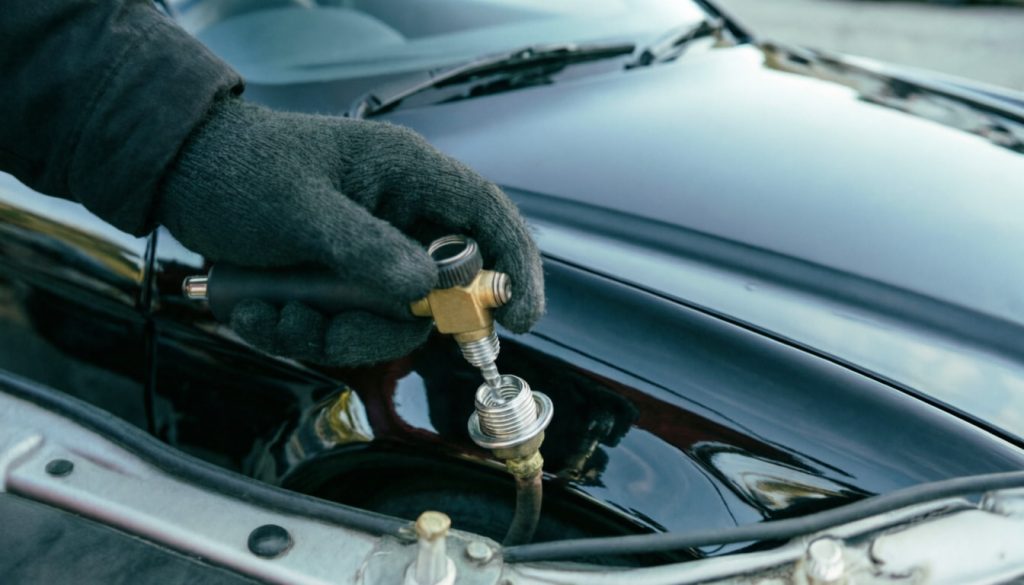
What service port caps really do
Many people think A/C service port caps are just “dust covers.” In reality, they do more than keep dirt out.
A good cap:
- protects the service port from dirt, moisture, and corrosion
- helps keep the valve core area clean
- acts as a secondary seal at the service port
- It's a small part, but it has an important job: it helps keep the A/C system sealed between service visits. If a valve core starts leaking, the leak can be slow and easy to miss—until your A/C gradually gets weaker again.
That’s why A/C service port caps replacement is a small, low-cost step that supports long-term A/C reliability.
Why missing caps can cause real problems
Service ports sit in a harsh environment: heat, road grime, salt (in winter states), moisture, and constant temperature cycling.
When caps are missing or damaged:
Dirt and moisture can build up around the valve core
Corrosion can develop and make future service harder
Seals can degrade faster
You increase the risk of slow leaks from the port area
- This is often how a "tiny detail" turns into repeated low-charge symptoms later.
Signs you should replace the caps
Caps are worth replacing when:
- A cap is missing
- A cap is cracked, stripped, or won't tighten properly
- There are signs of contamination around the port
- You want better long-term protection after service
- This is especially smart if the vehicle has had multiple A/C service visits over the years.
How we handle cap replacement
We install properly fitting caps designed for A/C service ports. The goal is simple:
Restore port protection
Support sealing at the service point
Reduce avoidable "slow leak" scenarios
Cap replacement can be done as a standalone add-on or paired with other A/C services.
Why this is part of "doing it right"
A/C problems are often blamed on “refrigerant level,” but many repeat issues come from small integrity weak points.
- Replacing caps isn't a magic repair. It's a preventive step that helps keep the service port area clean, protected, and better sealed—so your A/C service results last longer.
If you’re trying to avoid the top-off cycle, it makes sense to eliminate small leak risks wherever possible.
Conclusion
Service port caps are small, but they protect the port, reduce contamination, and provide a secondary sealing barrier. If caps are missing or damaged, replacing them is a simple step that can help prevent slow leaks and service complications later.
Schedule professional A/C service now:
Related Articles
Frequently Asked Questions
Are A/C service port caps actually important?
Yes. They protect the service ports from contamination and act as a secondary sealing barrier at the port.
Can missing caps contribute to refrigerant leaks?
They can. Missing or damaged caps allow dirt and moisture to contaminate the port area, and they remove a secondary seal that can help reduce slow seepage.
Should I replace caps if my A/C is working fine?
If caps are missing, cracked, or stripped, replacing them is smart preventative maintenance—especially in harsh climates.
Is cap replacement expensive?
It's typically a low-cost add-on compared to the problems missing caps can create over time.
Does replacing caps fix all A/C leaks?
No. Caps are not a fix for major leaks elsewhere, but they help reduce avoidable leakage and contamination at the service port area.